Quality is more than a selling point—it’s a business imperative. Whether you’re a Fashion Designer, Brand Owner, Manufacturer, or Retailer, your ability to judge, ensure, and communicate quality can define your reputation, impact your bottom line, and shape long-term customer loyalty.
Yet, many in the industry struggle with a simple question:
How do you actually judge quality in clothing—beyond buzzwords and assumptions?
It’s a deceptively complex issue. Quality isn’t a single variable. It’s a matrix of decisions—materials, construction, fit, finish, and intent—optimised (or compromised) to meet specific price points and market expectations.
In this guide, we’ll break down what “quality” really means in three major market segments:
1. Mass-Produced Budget Clothing
2. Mid-Tier & Contemporary Brands
3. High-End Luxury Apparel


And more importantly, we’ll show how to assess and ensure quality at each level—from a production and quality assurance standpoint. Whether you’re launching a label, scaling production, or sourcing for retail, this is the level of clarity and control that sets successful fashion businesses apart.
Why This Matters:
Quality Is the Competitive Advantage No One Sees—Until It Fails
A minor fit inconsistency. A poorly fused collar. A shirt that disintegrates after one wash.
These “invisible” issues only surface after the product reaches the consumer—and by then, it’s too late. Refunds, returns, and bad reviews follow. Worse still, your brand’s credibility erodes.
That’s why professionals across the supply chain are turning to Quality Assurance (QA) and Quality Control (QC) services to identify issues before they reach the market.
Let’s explore how quality plays out across the three key market tiers.
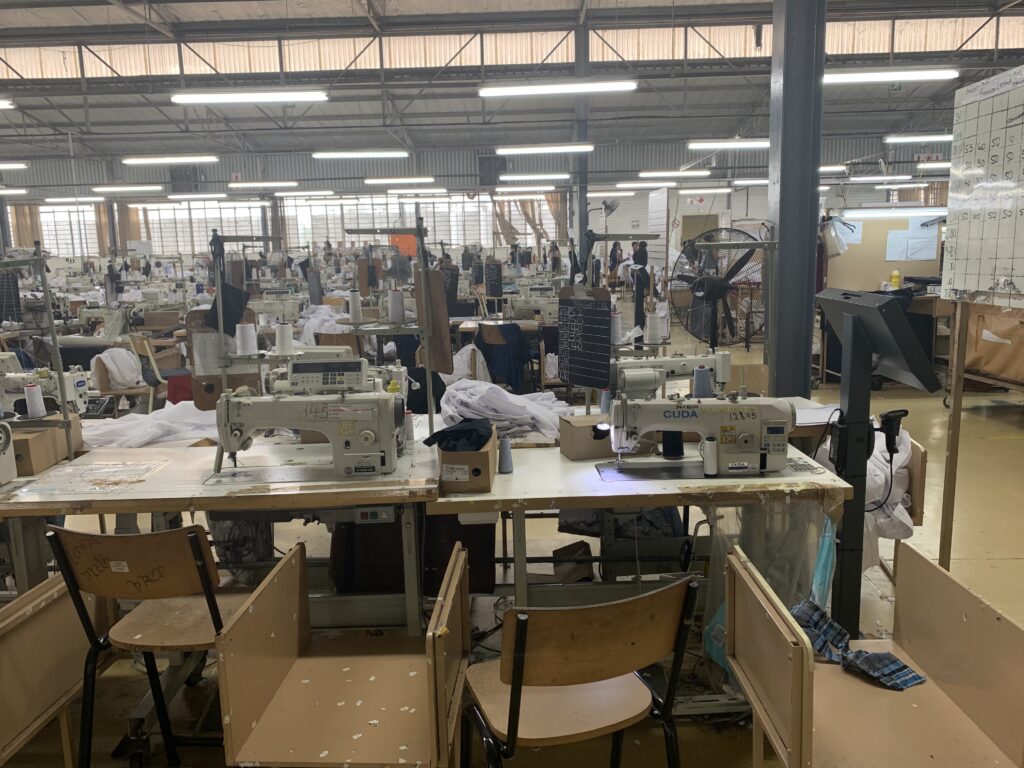
1. Mass-Produced Clothing — Quality at Scale
Typical Retail Price: R500 or less
Target Market: Budget-conscious consumers
Customer Expectations: Low price, trend-forward wearable aesthetics, basic durability, immediate availability
Business Priority: High-volume output, fast turnaround, low manufacturing costs, basic retail compliance
Quality Strategy: Basic fabric performance, higher margin of tolerance on fit, fabric blends and synthetics, basic construction standards
What "Quality" Means Here
In the mass-market segment, quality is about predictability, safety, and efficiency. Consumers expect garments that are wearable, wash-safe, and free from glaring defects.
From a brand perspective, quality is about:
Meeting minimum industry standards
Delivering visual and functional consistency across thousands of SKUs
Keeping return rates below retail thresholds
What to Inspect
| Area | What to Inspect | QA/QC Best Practices |
|---|---|---|
| Fabric | Check GSM, colourfastness, shrinkage | Lab testing for wash durability and dimensional stability |
| Construction | Seam strength, thread count | Random AQL (Acceptable Quality Limit) inspections |
| Trims | Button pull tests, zipper cycles | Simplified trims & finishes. Mechanical testing of attachments |
| Fit Tolerance | Must be consistent across batches | Tech Packs & Size set approvals, graded spec sheets |
2. Mid-Tier & Contemporary Clothing: Quality Becomes Brand Equity
Typical Retail Price: R400 – R2,000
Target Market: Style-conscious consumers, medium to high income, quality conscious
Customer Expectations: Trendy and Fashion forward clothing, comfortable and accurate fit, moderate to long-term durability, good value, tactile and visual quality
Business Priority: Balanced cost-to-quality ratio, consistent production standards, stronger brand credibility, reduced return rates, scalable quality control
Quality Strategy: Natural or premium blend fabrics, reinforced stitching and clean finishes, up to date and consistent fit, longer resistance to wear and tear
What “Quality” Looks Like Here
This segment requires a clearer quality identity. You’re no longer just producing functional clothes — you’re building trust through product performance. A sweater that pills or a shirt that shrinks will hurt your customer retention and brand loyalty.
Key Quality Metrics
Area | Evaluation Criteria |
Fabric | Long-staple cotton, blended knits, tighter weaves |
Construction | Reinforced seams, clean topstitching, bar tacking |
Fit | Consistency across sizes, accurate pattern grading |
Durability | Tested through washing, lightfastness, tensile strength |
QA Services to Implement
- Critical Path Plan and Tech Pack engineering: Ensure advanced and methodical planning
- Lab Fabric Testing: Especially for colour retention, pilling, spirality and dimensional stability
- Supplier AQL training and Inline inspections at multiple stages: Ensure suppliers understand requirements
3. Luxury & High-End Apparel — Quality as Identity

Typical Retail Price: R2,500 – R30,000+
Target Market: Affluent buyers, bespoke clients, fashion collectors, high-income consumers
Customer Expectations: Flawless craftsmanship, premium fabric with traceability, long-lasting wear and structural integrity, exclusive availability, luxury presentation and packaging
Business Priority: Zero-defect tolerance, preserve brand prestige, deliver artisan-level garments, maintain exclusivity, exceed high-end retail standards
Quality Strategy: Certified heritage textiles, detail oriented aesthetics, hand-finished construction, brand-specific QA protocols, detailed trim and packaging, visual and tactile perfection
What "Quality" Means Here
Luxury customers are buying into brand ethos, craftsmanship, and exclusivity. Every detail—from the button stitching to fabric provenance—must feel deliberate and flawless.
For luxury brands, quality is a multidimensional narrative:
- Construction: Hand-finished or high-stitch-count machine work (e.g. full canvas jackets, handrolled hems)
- Material Integrity: Extra-long staple fibres, traceable wool, low-impact dyeing processes
- Design Execution: Garments must fit and flow perfectly—not just look good on hangers
What Professionals Should Focus On
Area | What to Inspect | QA/QC Best Practices |
Fabric | Origin, weaving method, GSM, consistency | Fibre certification, lab verification of composition |
Fit & Construction | Stitch type, canvas, fusing, interlining. Precise Fit | In-depth sampling, hand-stitch quality audits. Fit trials |
Trims | Bespoke fastenings, hand-sewn buttonholes | Component sourcing QC, load tests |
Brand Standards | Visual harmony, finishing, packaging | Brand-led QA scoring systems and manuals |
Pro Tip for Brand Owners & Manufacturers:
Luxury QA is about proactive protection of brand equity. You need a tailored inspection framework—generic AQL methods won’t capture issues like visual asymmetry or tactile inconsistencies.
What Quality Assurance Solves:
Brand-damaging defects that may not show up in standard checks—but will be obvious to discerning clients. Also ensures consistency across boutique-scale production runs.
Quality is a Process
Even the best raw materials can’t save a poorly executed garment. Quality is the sum of:
- Design intention
- Fabric integrity
- Production execution
- Post-production care
It’s a system, and it’s only as strong as its weakest link.
Without third-party quality assurance, many brands simply can’t catch mistakes made by outsourced factories, inconsistent materials from mills, or internal communication gaps.
How Quality Assurance Services Support Each Segment
Business Type | QA/QC Services That Add Value |
Startup Brands | Quality Strategy, Quality Processes, Tech Packs, Factory Sourcing, Fabric Processes, Pre-Shipment Inspection, Quality Checklist |
Established Brands | Critical path Plan, Fabric Strategy, Quality Engineering, Quality Manuals, Ongoing Factory Audits, Inline QC |
Manufacturers | Quality Strategy, Inline QC, Needle Policy, Independent compliance checks, AQL training |
Retailers | Product knowledge, Fault classification , Product-Level Audits, Pre-Stock Quality Review |
Final Thought
Quality isn’t a price point—it’s a promise. To your customers. To your retailers. To your investors. And to your brand legacy.
Whether you’re producing 50, 500 or 50,000 garments per season, integrating third-party quality assurance and quality control into your production process is no longer optional—it’s a competitive advantage.
Don’t leave your quality up to chance. Get it inspected. Get it verified. Get it right.