If your garments don’t fit consistently, nothing else fully rescues the customer experience. Therefore, why understanding size charts matters is not a niche technical question – it’s a business imperative. Size charts connect the human body to your design decisions, production process, and customer communication. Consequently, a smart size strategy reduces returns, increases conversions, and makes every product feel intentional.
Below, you’ll find a structured, actionable guide that explains why understanding size charts matters and shows you exactly how to build, validate, and communicate a size chart that works for your brand and your customers.
What is a size chart
A size chart is a structured set of target measurements that represent the bodies your brand designs for. However, it’s not merely a spreadsheet; it’s a reference that informs design choices, pattern drafting, grading, manufacturing, and customer expectations. Put simply, size charts translate human variability into actionable design parameters.
For example, when you know the measurement for “Size M — Bust 38 in / Waist 32 in / Hip 41 in,” your pattern maker, factory, and marketing team all share the same vision of what “M” actually means. Moreover, as you collect real-world data and feedback, your size chart becomes an evolving dataset that signals who your customer truly is.
Why this is important: without a clear chart, every stage from initial sketch to shipped product becomes an opportunity for misinterpretation. Therefore, understanding size charts matters to ensure quality, efficiency, and customer trust.
External vs. Internal size charts: roles and differences
First, the public (external) chart.
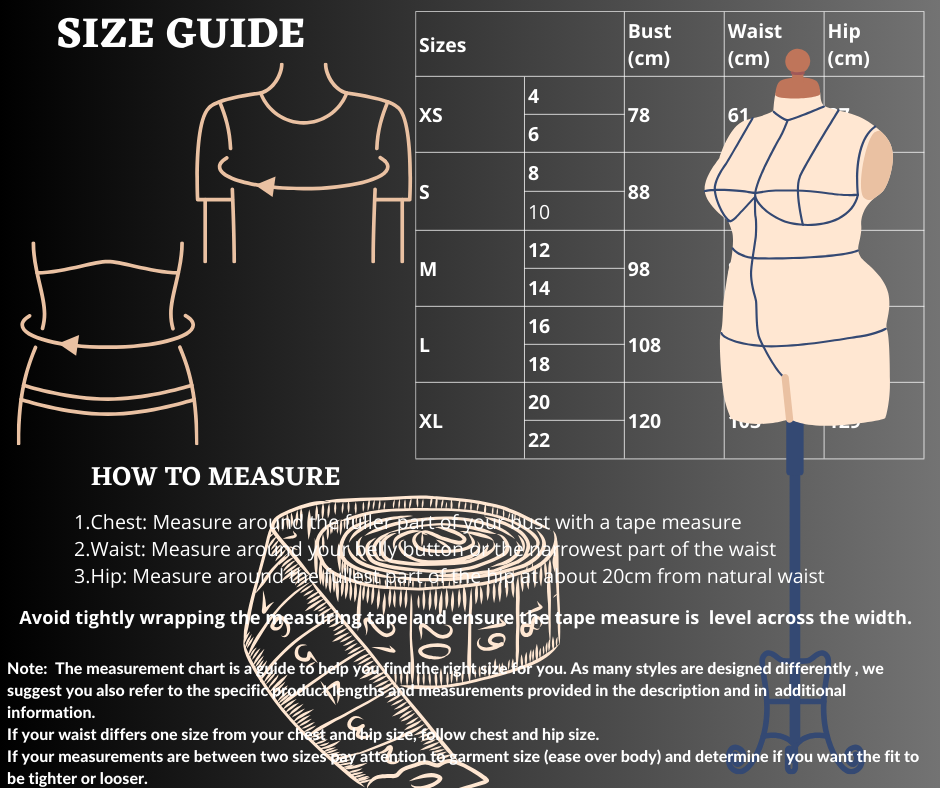
This is the user-facing table on product pages: usually a small set of dimensions (bust/chest, waist, hip, and sometimes height or inseam). Its job is straightforward: help customers pick the right size.
Second, the internal (private) chart.
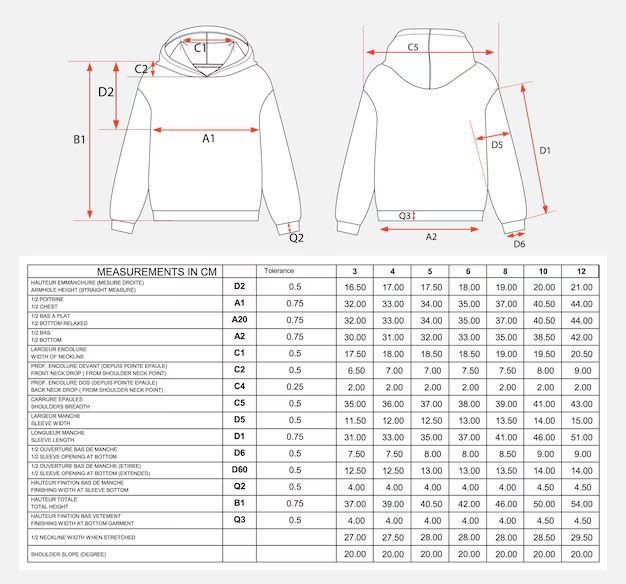
This is the detailed blueprint used by your technical team. Derived from the standard body measurements chart. Typically, it includes 15-25 measurement points (or more) such as high bust, shoulder width, arm length, back waist length, thigh girth, and inseam. This internal document is the a reference for pattern drafting and grading.
Key differences
Purpose: External educates customers; internal directs production.
Granularity: External is concise; internal is granular.
Audience: External targets shoppers; internal targets designers, techs, and factories.
Both matter. While the external chart reduces returns and boosts conversions, the internal chart ensures consistency across styles and seasons. Therefore, understanding size charts matters because both versions together create alignment across the business.
Who you serve: customer archetypes and implications
Understanding who you design for is essential. In practice, brands often think in archetypes. Below are common personas and the fit considerations each implies.

Core archetypes
Core / Median Customer – The “average” shopper. Use this profile to define your base block (often size M).
Teen / Young – Rapid growth; slimmer shoulders; changing proportions. Incorporate adjustability and stretch.
Plus-Size – Different bust-to-waist ratios, fuller hips; often requires larger grade increments and repositioned darts.
Petite – Shorter torso and limbs; keep circumferences but shorten lengths proportionally.
Tall – Longer inseams and torso; lengthen without increasing circumference.
Consequently, you may need separate internal charts (or grading rules) for each archetype. Notably, brands that create sub-ranges (petite, tall, plus) see improved fit and customer satisfaction because they respect proportional differences rather than merely scaling one chart up or down.
Core measurements and how to teach customers to measure
Clarity and accuracy in measurement are the foundation of a useful size chart. Below are essential measurement points you should include in your internal chart and how to describe them on the public chart.
Essential measurement points for Internal Size Chart
Height – overall body length; guides garment lengths.
Bust / Chest – fullest part of the chest (bust apex).
High Bust – just above the bust; useful for fitting bodices and bra compatibility.
Waist – depends on type of garment
Hip (Full Hip / High Hip) – fullest part of the buttocks / hip area.
Shoulder Width – from shoulder point to shoulder point across the back.
Armhole – angle from shoulder point; to underarm ,impacts sleeve set.
Arm Length – from shoulder point to wrist.
Upper Arm / Bicep Girth – critical for sleeve ease.
Inseam – crotch to ankle; essential for pant lengths.
Back Waist Length – nape to waist seam; measures bodice drop and waist placement.
How to present measurement instructions to customers
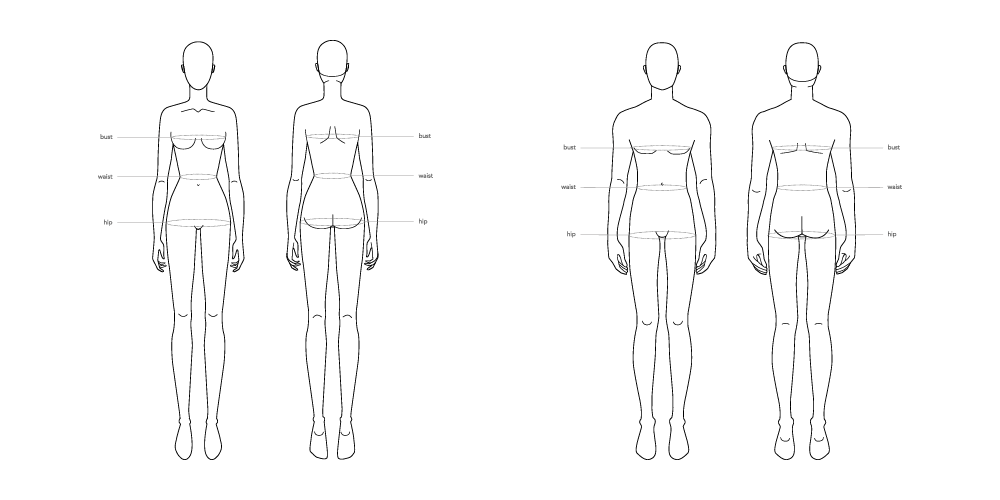
Use short, stepwise instructions supplemented with visuals:
“Stand straight and relaxed.”
“Wrap tape around the fullest part of your bust; do not compress.”
“Measure natural waist at the narrowest point.”
“Measure hip at the widest point around the buttocks.”
Include callouts: “Ask a friend to help” and “Measure over undergarments you will wear with this garment.” Because measurement error is common, well-labeled diagrams and short videos reduce mistakes and, as a result, returns.
Ease allowances
“Ease” is the space added to body measurements to create a wearable garment. essentially, ease has two components:
Wearing ease
This is the minimum room required for basic movement – breathing, sitting, raising arms. For example, a tailored blouse might need 1-2 inches of wearing ease at the bust.
Design ease
This is extra fullness added for stylistic effect – drape, volume, or silhouette. A full skirt could have 8-12 inches of design ease at the hip.
How to set ease
Classify garments: “Fitted,” “Standard,” “Relaxed.”
Document typical allowances per category (e.g., fitted tops +1–2″ at bust; relaxed tops +4–6″).
Test on real bodies: prototyping exposes whether your chosen ease feels right in movement and daily life.
Because ease directly affects comfort and appearance, understanding size charts matters not least because it defines how a garment feels, not only how it measures.
The bodice block and linking pattern-making to your chart
Your bodice block is the master pattern from which garments are developed. Therefore, it must be drafted precisely from your internal chart.
Steps to create a block
Choose base size – usually your median customer (size M).
Plot measurements – bust apex, high bust, waistline, shoulder slope, back neck point.
Apply ease – add wearing and design ease according to garment category.
Add seam allowances – standardise (e.g., ½″ or 1 cm) for consistency.
Prototype and refine – use a muslin/calico and test on fit models.
When every design starts from a well-measured bodice block, subsequent patterns inherit the same fit DNA. Consequently, this practice reduces contradictory fit across different styles and saves countless sample iterations.
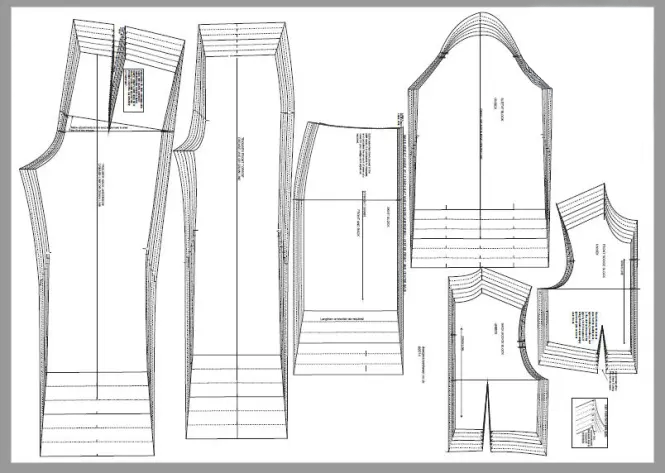
Grading is the method of scaling a base block to create a full size range. Yet, human bodies don’t scale like 3D models; proportions change. Hence, grading must be rule-based and data-informed.
Grading across sizes - principles and pitfalls
Grading principles
Set realistic increments: common increments are ±2″ for bust/hip and ±1″ for waist, but apply real data to adapt.
Recognise proportion changes: plus sizes often need relatively larger hip increments; petites need smaller height steps.
Maintain design intent: keep silhouette consistent across sizes by adjusting ease appropriately.
Common grading mistakes
Uniform scaling: multiplying the block by a single factor leads to unnatural proportions.
Ignoring bust point shifts: as sizes increase, bust apex often moves; dart and seam positions must adapt.
Failing to document rules: undocumented ad-hoc grading creates inconsistency across collections.
Ultimately, understanding size charts matters because grading translates your single-size proof into a trustworthy size set for customers.
Testing, validation, and iteration
A size chart is a living tool. As such, it needs ongoing validation.
Practical validation steps
Fit sessions: real people, varied postures (sit, walk, reach).
Wear trials: send samples to customers for day-of-life feedback.
Return analysis: track returns by reason and size to detect patterns.
Periodic scanning: 3D scans yield precise data trends for your customer base.
Frequency of review
Review internal charts at least annually, or more often if you expand into new markets, launch new silhouettes, or notice shifting return patterns. Because bodies and trends change, iteration is not optional — it is essential.
Communicating the chart: UX, education, and tools
Even the best internal chart fails if customers don’t use it correctly. Thus, communication is key.
UX and content tactics
Place the public size chart close to the product: don’t bury it in site footers.
Add a “How to measure” video near the chart.
Use interactive “Find my size” tools: few inputs lead to confident recommendations.
Label fit explicitly: “fitted/standard/relaxed” plus actual ease numbers.
Offer fit notes: “If between sizes, size up for layering.”
After-sale support
Provide clear return/exchange policies and fit FAQs.
Collect customer feedback at checkout to refine measurements and ease.
Because communication reduces confusion, it directly impacts returns and customer satisfaction — reinforcing again why understanding size charts matters.
Common mistakes and how to avoid them
Some errors are predictable; avoiding them saves time and money.
Mistake checklist
Copying generic untested charts: always collect your own data or use trusted sources.
Designing only for the average: accommodate variance with extra ease or stretch.
Skipping dynamic testing: test movement, not just static fit.
Poor documentation: maintain grading and ease rules in a central system.
Bad measurement guides: use visuals and video to prevent user errors.
Address these proactively, and you’ll keep returns down while improving customer loyalty.
Practical workflow and checklist
Use this workflow to implement or refine your size chart.
Step-by-step checklist
Define archetypes and pick a base size.
Collect data: surveys, 3D scans, public datasets.
Clean & cluster data, remove outliers.
Select core measurement points.
Set ease allowances per category.
Draft bodice block and prototype.
Run fit sessions across archetypes.
Document grading rules and apply consistently.
Publish public chart with clear guides.
Educate customers with videos and interactive tools.
Review quarterly or biannually and iterate.
Following this routine ensures your chart remains accurate, actionable, and customer-focused.
Primary keyword
Why Understanding Size Charts Matters
Additional / LSI keywords
size chart guide
how to create a size chart
size chart for apparel brands
measuring guide for clothes
grading size chart
reduce returns with size chart
public vs internal size chart
size chart best practices
how to measure bust waist hip
Why it all matters
To recap: size charts are the connective tissue between design intent and human bodies. Therefore, why understanding size charts matters cannot be overstated. With accurate measurements, thoughtful ease, disciplined grading, and clear customer communication, you change sizing from a liability into a strategic strength.
Finally, approach your size chart as a living product: collect data, run tests, iterate, and document everything. Do so, and your garments will fit better, your returns will drop, and your customers will come to rely on your brand for both style and confidence.
Fast-Track with Pre-Graded Bodice Blocks
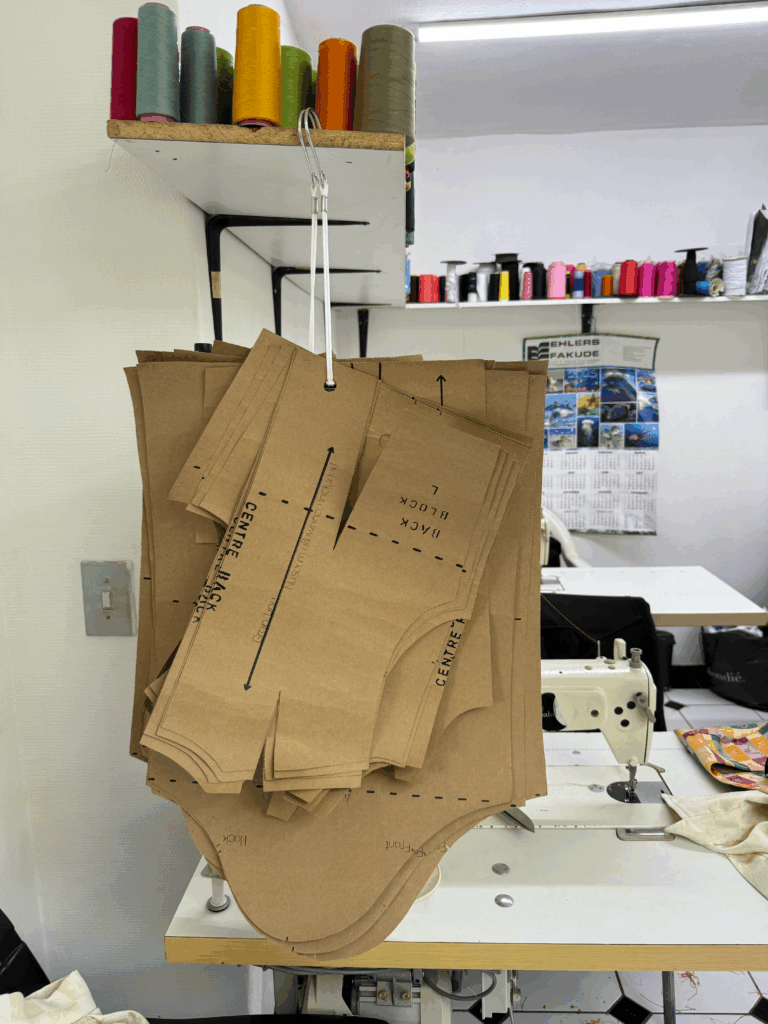
Understanding size charts matters because they are the bridge between design intention and real bodies. They reduce returns, tighten your sampling cycle, and build shopper confidence.
If you take one thing from this guide, let it be this: invest in your internal chart, test constantly, and communicate clearly-those three actions will return dividends in fit quality and customer loyalty.
Alternatively, if you want speed and precision without building everything from the ground up, consider a practical shortcut: buy pre-graded bodice block patterns that include a ready-made size chart.
For example, our graded basic bodice block patterns (which include a full size chart) are available here: https://kathoclothing.co.za/product/graded-basic-bodice-block-patterns/
Why this is helpful: instead of spending weeks collecting data, drafting a block, and grading each size, you get a professionally graded set delivered instantly. Consequently, you can start prototyping same-day, validate faster, and move into production with confidence. Best of all, the bundle saves you the repetitive, technical work-so you can focus on design details, fabric choice, and brand storytelling.
If you value accuracy, convenience, and speed-yet still want the control that comes from a documented size chart-this is a sensible, efficient next step. Use the block as your trusted baseline, adapt it with your brand’s ease rules, and run the streamlined fit sessions we outlined above.
Ready to speed up your fit process? Explore graded bodice blocks and size charts here: https://kathoclothing.co.za/product/graded-basic-bodice-block-patterns/ – fast, convenient, and designed to plug directly into your pattern workflow without reinventing the wheel.