A Standard Body Measurements Chart is one of the most overlooked tools in clothing development. Beautiful fabric, strong design, and good sewing all matter. However, without a clear measurement foundation, fit problems can still creep into the final garment and damage customer trust. That is the part that is often missed.
Standard body measurements chart gives every garment a clear starting point. Before you add style lines, seam allowance, fullness, or design detail, you already know which body you are working from. As a result, your pattern has structure before the design takes shape.
A shared measurement base keeps your sizing steady from one style to the next. A size small should not feel generous in one blouse, narrow in another, and completely different in a dress. When the foundation is clear, the fit becomes easier to control.
Customers may not know the technical reason behind good fit. However, they feel it immediately. More importantly, they begin to trust the fit.
For clothing brands, that trust supports repeat sales. For home sewists, it builds client confidence. For pattern makers, it creates consistency across blocks, samples, and final garments.
A good body measurement chart supports better decisions from the start. It guides the pattern. It gives sizing a clear structure. It also helps you explain fit choices with more confidence.
In simple terms, better measurements lead to better patterns. Better patterns lead to better garments. Better garments build trust.
What a Standard Body Measurements Chart Actually Is
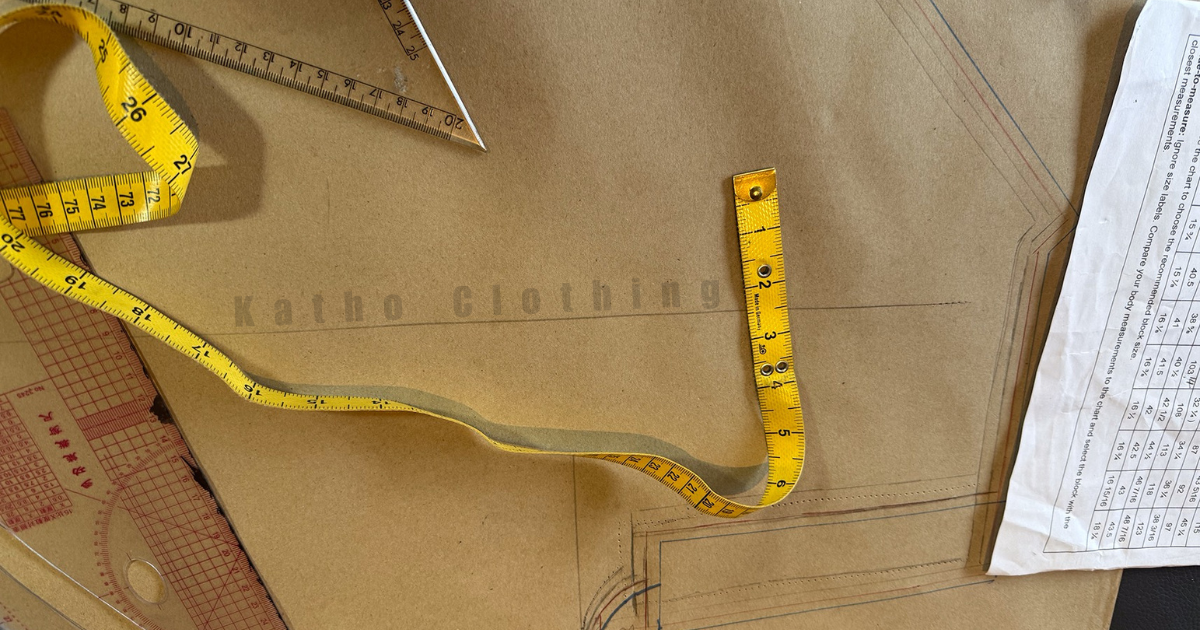
A standard body measurements chart is a comprehensive internal reference tool. It is a set of agreed body measurements (bust, waist, hips, shoulder width, arm length, back length, nape to waist, across front, across back, and more) for each size in your range. It represents the actual human body your garments are designed to fit.
It is the foundation. Everything else (your blocks, your patterns, your grading, your spec sheets, your customer-facing size charts) is built on top of it.
What a Standard Body Measurements Chart Actually Does
Think of it like construction. You would never build a house without a level foundation. Similarly, you cannot build a garment system without a stable measurement base.
A standard body measurements chart defines:
- The base body dimensions for each size
- Proportions between key points such as bust, waist, and hip
- The relationship between vertical and horizontal measurements
Because of this, it becomes your reference point for every decision that follows.
Without it, every pattern starts from guesswork.
Why Most Brands Get This Wrong
Many brands skip this step or treat it lightly.
Instead, they:
- Copy measurements from another brand
- Adjust values randomly during sampling
- Rely on “what looks right” during fittings
At first, this seems efficient. However, it creates problems that grow over time.
For example:
- One dress fits perfectly, but another feels tight in the same size
- A top pulls at the armhole, even though the bust is correct
- Customers complain about inconsistent sizing
These are not isolated issues. They are symptoms of a weak foundation.
Without a clear standard body measurement chart, every new style becomes a new starting point. That means more sampling, more corrections, and more cost.
Why “Just Find One Online” Does Not Work
I know what you are thinking. Surely there are plenty of size charts online to pull from?
Yes, and that is part of the problem.
Some of what you find is credible. There are decent size charts out there from reputable sources. But here is the issue: they are size charts, not body measurements charts. And those are not the same thing.
A typical size chart gives you the basics: bust, waist, hips, maybe a height. That is enough to help a customer pick a size off a rack. It is not enough to draft a block.
To draft a block that actually fits, you need far more than three measurements. You need shoulder width, across front, across back, neck circumference, nape to waist, inleg, arm length, upper arm circumference, wrist, skirt length, knee position, and more, depending on what you are making.
A basic size chart does not give you these. So what happens? You fill in the gaps yourself. You estimate. You borrow a shoulder measurement from one source, an arm length from another, and a back length from a third.
You end up with a patchwork of numbers from different references that were never designed to work together. And you wonder why the block does not balance properly when you test it.
A comprehensive standard body measurements chart gives you every measurement you need, in one place, built to work together as a complete set. The proportions between measurements are consistent. The relationships are correct. Nothing is borrowed from a source calculated on a different body type for a different purpose.
What This Costs You When You Skip It
Let us get into the numbers for a moment. Why does this actually matter for your bottom line?
The return rate problem. In e-commerce, the number one reason for returns is poor fit. Every time a garment comes back, you lose the shipping cost, the processing time, the relisting effort, and the customer’s trust. Stack a few of those up and your margins disappear.
The ease problem. You cannot calculate ease (how much room a person has to move in a garment) if you do not know the baseline of the body. A standard body measurements chart tells you the actual circumference of the bust, waist, and hip. From there, you decide whether the garment is fitted, relaxed, or oversized. Without the baseline, your patterns are just guesses.
The grading problem. When you grade across sizes, the increments come from your standard body measurements chart. The body does not scale uniformly. The bust might increase by 4 to 6cm between sizes, but the shoulder only by 0.5 to 1cm. If you add a flat amount to every measurement (because you do not have proper data), your size 10 might be fine, but by the time you reach size 16 or 18, the proportions have collapsed. Your size 16 customer says something feels off but cannot explain what. The problem is the grading, and the grading problem traces back to the measurement chart.
The reputation problem. When a customer knows that a Size 12 from your brand fits her perfectly every time, you have locked her in. Consistency is the highest form of luxury in apparel. Inconsistency is the fastest way to lose her.
“But I Only Sew for Individuals”
You might be thinking, “I sew bespoke. I do not need a standard body measurements chart.”
You need it more than anyone. It gives you a base to work from.
A standard body measurements chart lets you show your client exactly where her body differs from the standard. It moves the conversation from “I think this looks tight” to “Based on the standard 5cm of ease for this fabric, we need to adjust the side seam.”
That is the difference between someone who sews and a technical designer. The chart is not a constraint on your bespoke service. It is what makes the bespoke service feel professional, considered, and worth what you are charging for it.
The Hierarchy: How Everything Connects
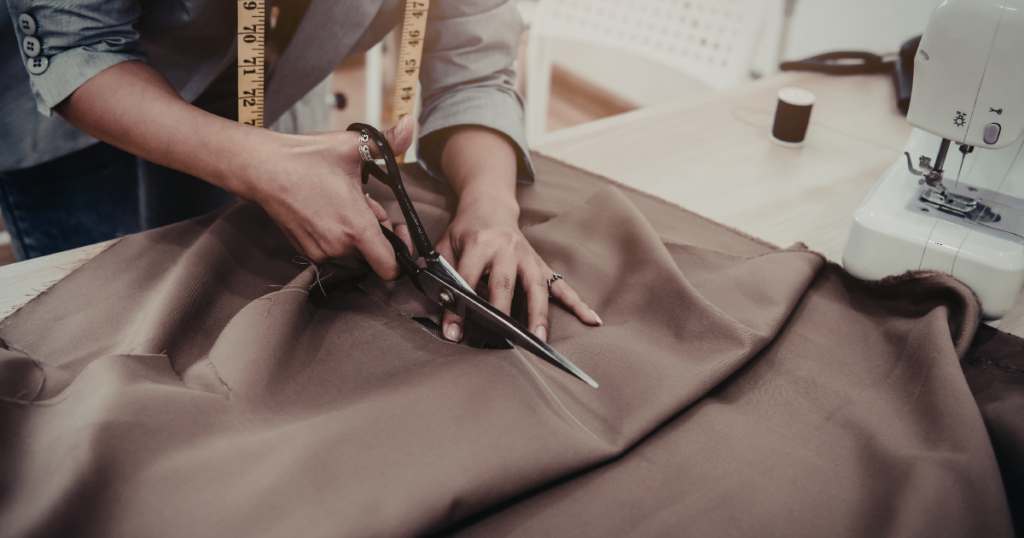
Here is what most clothing makers do not see until they have been in this work for years. Your foundational tools sit in a hierarchy. Each level builds on the one below it. If the base is wrong, everything above it is compromised.
It looks like this:
Level 1: Standard body measurements chart. The bedrock. Everything else is built from this.
Level 2: Basic block. Drafted from your measurement chart. The master pattern that represents the body in fabric, with the right ease and proportions.
Level 3: Fit testing and approval. You test the block in calico. You confirm it fits the way the standard says it should. Nothing moves forward until it is approved.
Level 4: Pattern development. Every garment starts as a modification of the approved block. Inherits the fit. Inherits the consistency.
Level 5: Grading. Grade rules are derived from your measurement chart. Every size scales proportionally because the data supports it.
Level 6: Specification measurement charts. The documents you send to production. Tell the maker exactly what the finished garment should measure at every point.
Level 7: Customer-facing size charts. This is the last thing you build, not the first. The retail size chart on your website is a simplified version of your internal data.
Every level depends on the one below it. And every level traces back to one document.
When the chart is unstable, every layer above it wobbles. Your blocks are slightly off. Your grading is unreliable. Your spec sheets contradict each other. Your customer-facing size chart does not match the garments you produce. You spend years chasing fit problems and never quite work out where they started.
When the chart is solid, every layer above it is solid too. Your fit is consistent across styles. Your grading produces proportional results. Your spec sheets are trustworthy. Your customer experience holds steady.
One document. Years of compounded benefit (or compounded problems). That is why this matters.
Standardisation Creates Speed (Not Limitation)
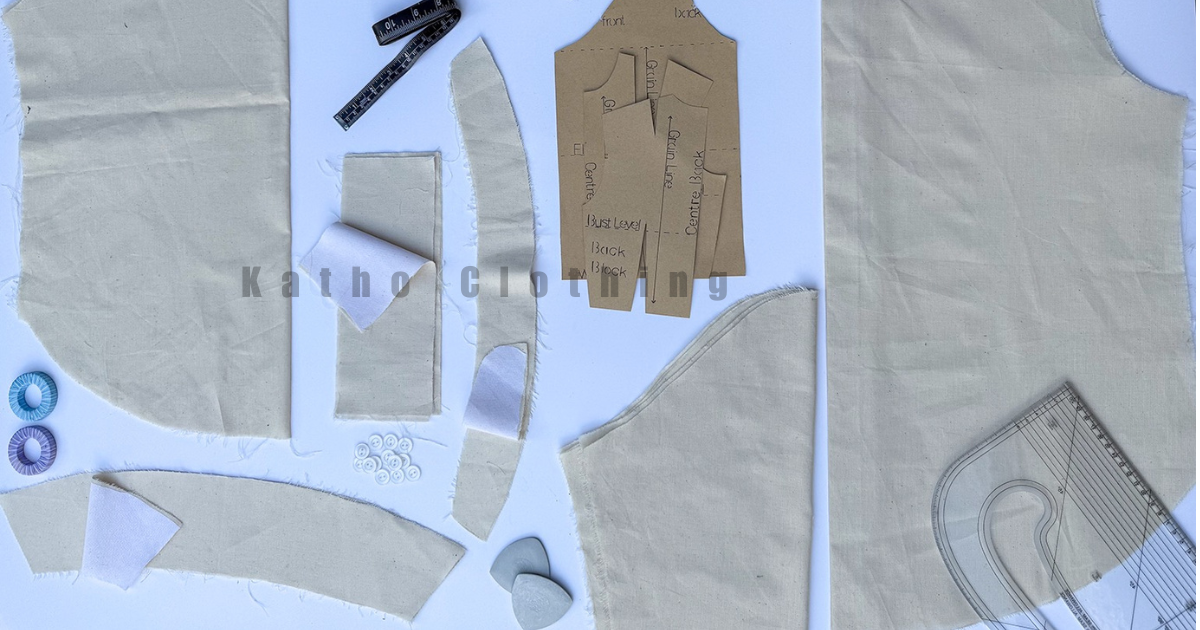
Some designers worry that standardisation limits creativity.
In reality, the opposite is true.
When your foundation is stable:
- You spend less time fixing technical issues
- You spend more time refining design
Think of it like this:
A musician who understands scales can improvise better.
A designer with a solid measurement base can create more freely.
Your standard body measurement chart removes uncertainty.
It does not remove creativity.
The Long-Term Impact
When you invest in a strong measurement foundation:
- Your products become more predictable
- Your customers trust your sizing
- Your returns begin to decrease
Over time, this builds something valuable:
Consistency.
And consistency is what turns a one-time buyer into a repeat customer.
What to Do Next
If you have realised that your current foundation is shaky, you have a few options.
You can develop your own standard body measurements chart from scratch. This is possible, but it requires access to body measurement data across multiple sizes, an understanding of how the proportions relate to one another, and time. A lot of time.
The industry uses specific, researched frameworks (think ISO and ASTM standards) that define these proportions based on real-world ergonomics. These charts are built to work as complete sets, with every measurement point relating correctly to the others.
This is the difference between a hobby and a business. Between hoping each garment turns out and knowing each garment will.
So the real question is this: does your brand have a foundation, or just a really nice mood board?
If you are ready to stop guessing and start building properly, get a professional standard body measurements chart in your hands and start working from one trusted base. Because in apparel, getting it right from the start is not a suggestion. It is the only way to build something that lasts.
Want the complete picture? This is one piece of a much bigger system. Download my free guide, Get It Right From The Start: The Quality-First Roadmap to Building Premium Clothing, and walk through all 15 stages, from defining your quality standard to building the systems that protect it.